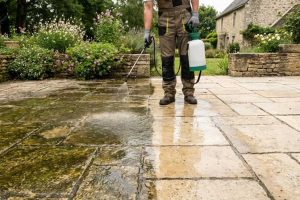
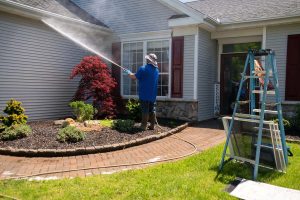
Soft washing stucco means cleaning stucco with low pressure and a targeted cleaning mix that removes stains and kills algae without damaging the finish. It’s the safer choice for porous exteriors like stucco and EIFS, especially in Hampstead’s humid, coastal climate where organic growth can spread quickly. If you’re weighing soft wash vs pressure washing, know that high PSI can force water behind the wall and create costly problems.
Dark streaks on stucco can sneak up fast. One week the wall looks fine; the next you see green specks, black lines, and chalky residue. Many people reach for a pressure washer, but that high force can break the finish and trap moisture. Soft washing uses gentle pressure and a purpose-built cleaning solution to clear growth and stains while protecting your exterior. Pressure Washing Hampstead trains technicians to treat stucco the right way so walls look clean longer and stay sound beneath the surface.
Key Takeaways
- Soft washing stucco uses chemistry and low pressure to clean safely and slow regrowth.
- High PSI can etch finishes, strip paint, and push water into wall systems.
- Aim for 100–300 PSI at the surface (typically under 500 PSI) with a 40°–60° fan tip.
- Apply bottom-up, allow 5–10 minutes of dwell time, and rinse gently.
- Call a local pro for tall walls, fragile finishes, or signs of water intrusion.
Soft Washing 101: What It Is and How It Protects Stucco
Soft washing uses low pressure and a cleaning mix to lift stains and kill organic growth. Pressure washing relies on high PSI to blast dirt off. Soft washing does the work with chemistry and controlled flow, not force, making it ideal for stucco, EIFS (Exterior Insulation and Finish System), and aged paint.
Stucco and EIFS are porous with a thin face coat, and older painted masonry can be fragile. High force can etch the surface, drive water inside, and strip paint. For delicate walls, keep rinse pressure low—often 100–300 PSI at the surface, and typically under 500 PSI. Use a wide fan tip (40°–60°) and keep the wand back so the stream feels like a strong garden hose, not a cutting jet. Test a small spot before treating the full wall.
If you want help with the right method for your whole exterior, consider Soft Washing Services or House Washing Services from a trusted local team like Pressure Washing Hampstead.
Risks of High Pressure: Cracks, Water Intrusion, and Stains
High PSI can push water behind stucco and EIFS. Trapped moisture swells, cracks, or blisters the finish and can feed mold within wall layers. Aggressive washing can also etch the face coat, leaving rough scars and exposing base layers. On painted masonry, high pressure may peel paint and smear oxidized pigment into dark streaks that look worse after cleaning.
There’s also a biological factor: blasting surface growth doesn’t kill the roots. When you scrub or spray too hard without proper chemistry, spores remain and return faster. Soft washing treats the stain and sanitizes in one step so the surface stays cleaner for longer.
The Safe Stucco Cleaning Process Step-by-Step
Work slowly, protect the wall, and let the mix do the job.
- Pre-inspect the surface. Note cracks, soft spots, rust, and peeling paint. Test a small area in a low-visibility spot. Pre-rinse or cover plants and metals.
- Select detergents for organic growth. A mild sodium hypochlorite solution (often 1%–2% on the wall) plus a surfactant helps cling and clean; add an algaecide if needed. Follow label directions.
- Apply bottom to top to limit streaks. Keep flow gentle and watch for drips; lightly brush stubborn areas if necessary.
- Allow 5–10 minutes of dwell time out of direct sun. Prevent drying; re-wet areas starting to dry.
- Rinse top down at low pressure using a 40°–60° tip. Keep the nozzle back so water sheets off rather than cutting in.
- Post-rinse neutralizing. Rinse plants, windows, and metals again. Use a plant or bleach neutralizer where recommended, then complete a final walk-around for touch-ups.
For large walls or tricky stains, a pro offering Soft Washing Services can work faster and safer with the right pumps, tips, and cleaners.
Ongoing Care, Weather Timing, and When to Hire a Pro
Plan cleaning during mild weather with no hard rain in the forecast; spring and fall often suit Hampstead conditions. Most homes stay in good shape with a gentle wash every 12–24 months, depending on shade, trees, and airborne salt.
Treat problem stains early. Rust often responds to an oxalic-based cleaner. Efflorescence (white salt) needs a masonry-safe product and a soft touch. Organic growth like algae usually clears with a mild soft wash mix.
Red flags for professional help include very tall walls, loose or cracking stucco, heavy oxidation, ongoing leaks or past water intrusion, and deep rust or paint failure. Pressure Washing Hampstead works across Hampstead each week with ladders, safety gear, and low-pressure systems to solve these issues carefully. They can also help with House Washing Services and Commercial Pressure Washing where measured pressure is appropriate.
Frequently Asked Questions
How is soft washing different from pressure washing on stucco?
Soft washing relies on low pressure and a targeted cleaner that kills algae, mildew, and mold. Pressure washing uses high PSI to force dirt off. On stucco and EIFS, high PSI can etch the face and push water inside. Soft washing cleans safely and helps the surface stay clean longer.
What mix is safe for cleaning stucco?
A mild sodium hypochlorite solution, often 1%–2% on the surface, plus a surfactant is common for soft washing stucco. Pre-wet plants and metals, apply bottom-up, allow a short dwell time, then rinse gently. Follow product labels and test a small area first to confirm safe results.
Can I use a pressure washer if I stand far away?
Distance helps, but risk remains. Even from far back, a narrow tip or a closer pass can etch stucco or drive water behind the finish. Use a wide fan tip and very low pressure, or choose soft washing. When unsure, bring in a trained pro to avoid lasting damage.
How do pressure washing costs factor into the decision?
Costs vary, but consider potential repairs. Saving time with high PSI can lead to etching, trapped moisture, and paint failure that are far more expensive to fix than a careful soft wash.
Key Takeaways
- Soft washing protects stucco and EIFS using low pressure and a gentle, targeted mix.
- High pressure can etch, strip paint, and force water into wall systems.
- Use wide fan tips and test spots; aim for 100–300 PSI at the surface.
- Apply, allow 5–10 minutes of dwell time, and rinse gently; neutralize plants and metals after.
- Hire a professional for tall walls, fragile finishes, or signs of water intrusion.
Conclusion
Clean stucco the safe way with low pressure and the right mix so walls last and look great. For careful, local help from Pressure Washing Hampstead, Contact us.